|
|
|
|
| |
| |
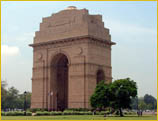
India Gate :: |
| |
|
A memorial inscribed with the names of the valiant Indian soldiers who laid down their lives in World War I. The green, velvety lawns at India Gate, particularly, are a popular evening and holiday rendezvous for young and old alike. A must visit place in New Delhi. |
| |
Purana Quila :: |
|
| |
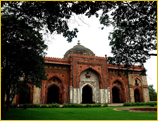 |
The Purana Quila is a good example of medieval military architecture. Built by Humayun, with later-day modifications by Sher Shah Suri, the Purana Quila is a monument of bold design, which is strong, straightforward and every inch a fortress. |
| |
Rashtrapati Bhawan :: |
| |
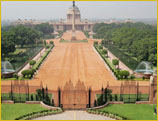 |
Modern New Delhi, or New Delhi as it is called, centers around the Rashtrapati Bhawan. It is architecturally a very impressive building standing at a height, flowing down as it were to India Gate. This stretch called the Rajpath is where the Republic Day parade is held. |
| |
Humayun's Tomb :: |
|
| |
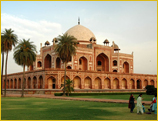 |
Humayun's Tomb was built nine years after Humayun's death by his wife Haji Begum. Designed by a Persian architect named Mirak Mirza Ghiyas, and completed in 1565, the edifice was a trendsetter of the time. It is said that all later Mughal monuments, including the Taj Mahal, followed its design. |
| |
Qutab Minar :: |
|
| |
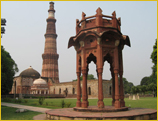 |
The Qutab Minar is located at a small village called Mehrauli in South New Delhi. Qutub-ud-din Aibek of the Slave Dynasty, who took possession of New Delhi in 1206, built it. It is a fluted red sandstone tower, which tapers up to a height of 72.5 metres and is covered with intricate carvings and verses from the holy Qur'an. |
| |
Baha'i Temple :: |
|
| |
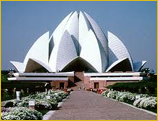 |
The Baha'i Temple, situated in South Delhi, is shaped like a lotus. It is an eye-catching edifice worth exploring. Built by the Baha'i community, it offers the visitor a serenity that pervades the temple and its artistic design. |
| |
Red Fort :: |
|
| |
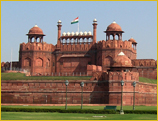 |
Red Fort- a fascinating building, built with red sandstones is an example of the rich Mughal architecture. Red Fort is a venue to the Independence Day parade of India. | | | |